
3,330 Photographs, 15 Winners: Wiki Loves Earth 2026 in Bangladesh
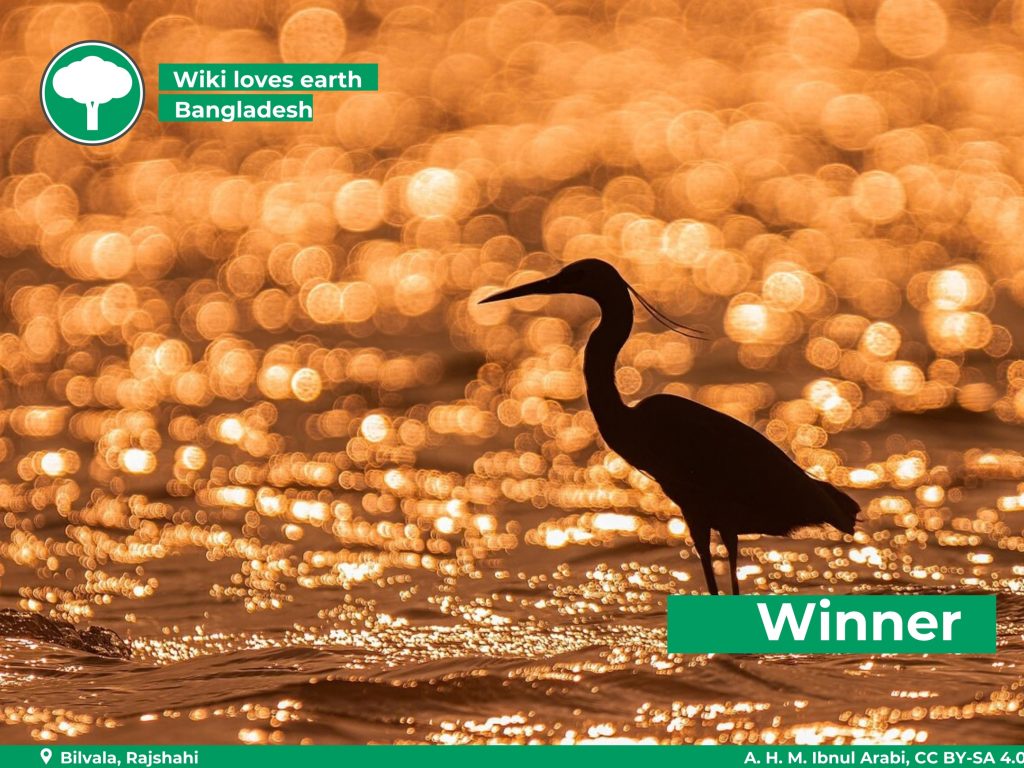
Wiki Loves Earth 2026 in Bangladesh has closed with 3,330 photographs uploaded to Wikimedia Commons. The jury has finished scoring, and we can now announce the results.
Fifteen images take the top places, and all fifteen will go forward to the international round of Wiki Loves Earth. Alongside them, we are announcing something new this year: a special mention for the best nature and wildlife photograph that could not compete for a prize.
How the photographs were judged
A field of 3,330 files is more than any jury can look at properly, so the organising team ran a first round of evaluation ourselves while the competition was running. We checked entries against the contest rules, set aside duplicates and out-of-scope uploads, and narrowed the field to a shortlist of around 500 photographs.
That shortlist went to a jury of four experienced photographers and Wikimedians, who scored every image on it and produced the final ranking.
The winning photographs


Why some of the best photographs are not on this list
Wiki Loves Earth is a photography contest about protected areas. Every entry has to come from inside one of Bangladesh’s protected areas, and that condition sits alongside the photographic criteria rather than behind them. When we verified the locations of the highest-scoring entries, several images that had placed inside the top 20 turned out to have been taken outside any protected area boundary. They had earned their scores from the jury on photographic merit. We still had to take them out of the results.
This is the single most common reason a strong Wiki Loves Earth entry fails in Bangladesh, and it is usually not carelessness. A photographer spends a morning with a kingfisher at a pond behind their house, or finds a flycatcher in a patch of village forest, and the bird does not know that it is standing a few kilometres outside a sanctuary boundary. The picture is real wildlife photography. It is simply not a picture of a protected area.
A special mention, introduced this year
To give those photographs somewhere to go, we introduced a special mention this year for the best nature or wildlife photograph submitted that was taken outside a protected area. It carries no place in the main ranking and does not go to the international round, but it recognises work we were otherwise setting aside.
The first special mention goes to MD Sajjad Hossain for a spot-tailed pit viper photographed in Chattogram. Sajjad also placed seventh with his rhesus macaque from the Sundarbans.


What happens next
The fifteen winning images now go to the international round of Wiki Loves Earth, where they will be judged against winners from every other participating country.
Our thanks go to the four jurors for working through the shortlist, and to all 3,330 uploads and the people behind them. One request for next year: before you plan a trip, check the official list of protected areas in Bangladesh and confirm that the spot you are heading to is on it. It is the difference between a photograph that competes and a photograph we have to set aside.
Leave a Reply